2 designers, 1 product manager,
5 engineers, 4 marketers
User experience, interface design,
simplyifying omnichannel journeys,
user research & testing,
January 2020 - October 2020
2 Product Managers, Engineering Manager, 5 Engineers, Vendor partner
End-to-end Product Design Strategy
UX strategy, Systems mapping, User Research, Interaction design, Cross-functional alignment
2026
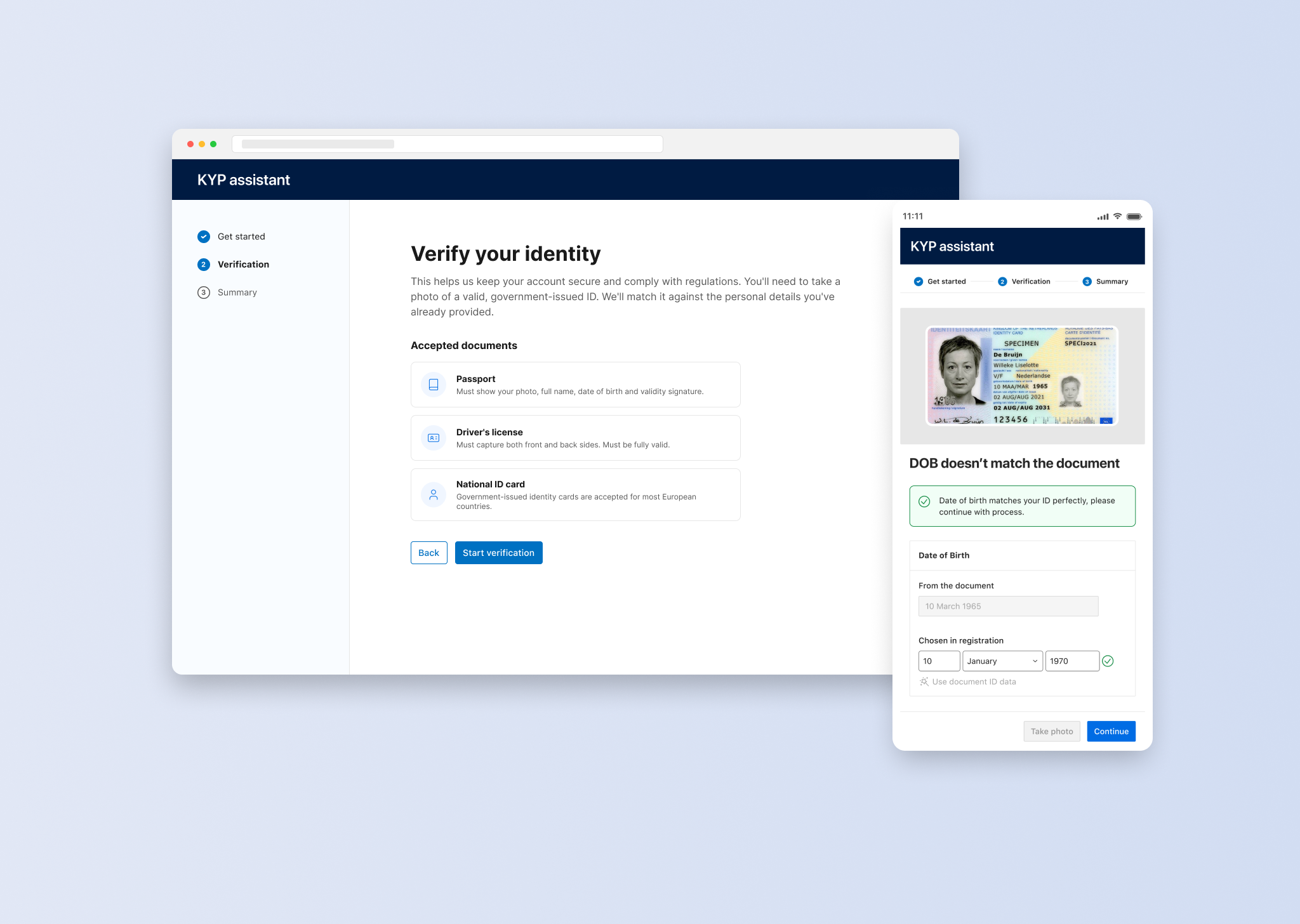
At Booking, every accommodation partner (hotels and property owners who rent out their residence as a vacation rental) must complete Know Your Partner (KYP) - a regulatory compliance process that includes verifying their identity documents.
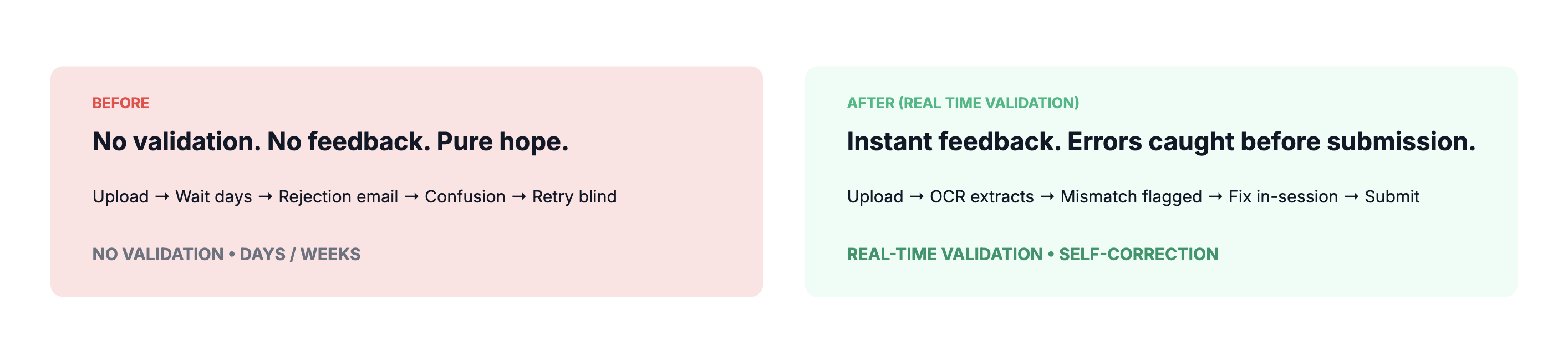
Partners submit ID documents with 0 real-time feedback. Any typo, data mismatch or expired document leads to rejection - discovered days later, with no explanation of what went wrong.
Business goal: Improve pass rate by catching document errors before submission, instead of relying on manual rejection after the fact check weeks later.
The major business problems we were tackling were:
Our accomodation partners going through the regulatory KYP process were facing 2 major problems:
I shaped the product direction, not just the interface.
The problem looked like "users upload bad documents."
But it was a system with no feedback loop.
Partners uploaded documents → submitted → waited → got rejected → retried.
%201.png)
The opportunity:What if we catch errors the moment a document is uploaded, and let users fix them before they hit submit?
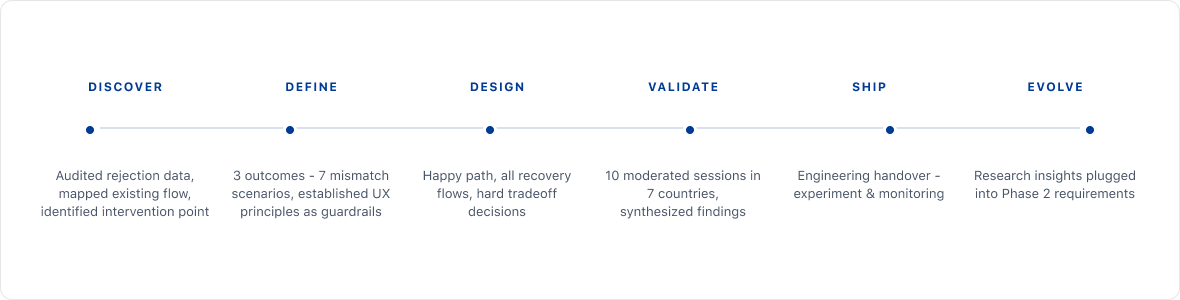
Before designing anything, I researched the space, understood the domain, studied the vendor and aligned with the team on technical constraints.
01
Competitor analysis
I studied various similar journeys of companies in the regulatory world like Onfido, Revolut, Stripe Identity, Jumio, Wise, etc to understand gaps in the product & use industry best practices for better UX.
02
Domain immersion
Learned automatic and manual verifcation processes, regulatory requirements, rejection funnel mechanics. Understood what's legally possible vs. what's not possible to design for scalability.
03
Vendor research
Studied vendor SDK patterns and aligned with their team. Identified where defaults worked vs. where we needed to override for our user context.
04
Tech alignments
Mapped API capabilities to user experience possibilities. Understood key things like confidence score mechanism, processing time, edge cases & informed the design accordingly.
Three validation outcomes

Mismatch scenarios mapped:
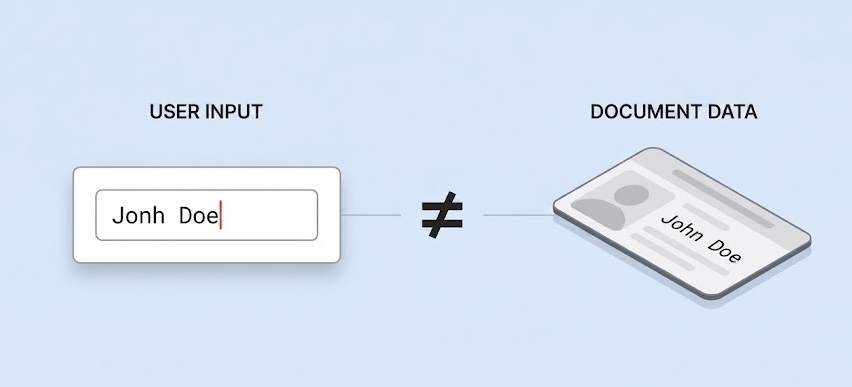
By diving deeper into the data, I mapped every combination across data mismatch and rejection scenarios- including name, date of birth and document expiry- and identified how each scenario changes on retry, as well as which resolution paths block one another.

This became the logic behind the experience, rather than treating each error as an isolated state.
Every off between partner control and system.
Make extracted data editable ~
Problem: OCR isn't always correct.
Decision: Let partners correct extracted values before they become a verification failure."Use ID data" lets them accept ID data over their typo in one click.
Rationale: Recovery is cheaper than forcing another submission.

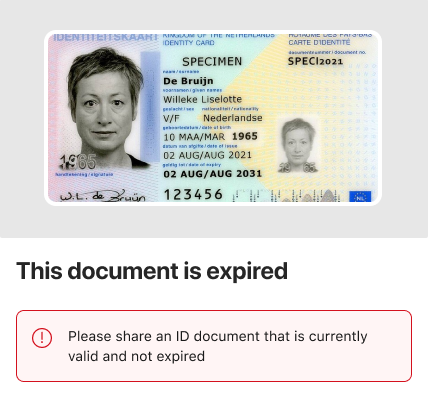
In-session quality validation ~
Problem: Invalid/blurry/expired documents documents were discovered too late before.
Decision: Move validation into the capture experience.
Why: Give users an opportunity to recover before submission.
Fallback experience ~
Problem: If OCR fails repeatedly, partners get trapped in a retry loop with no exit.
Decision: After failed attempts, proceed to graceful degradation with pre-filled data.
Why: Never make the technology's limitation the user problem.
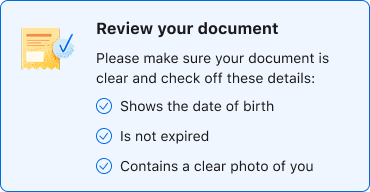
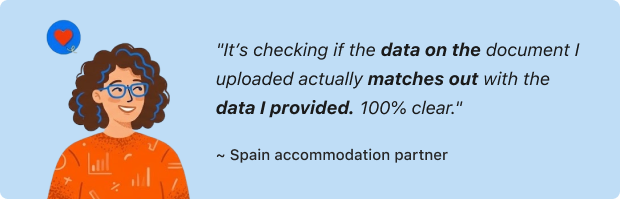
Designed the research methodology: With the help of research team, we conducted 10 moderated sessions, 7 countries, controlled mismatch scenarios on both mobile and desktop.
What worked well:
Two-column comparison immediately understood by all the participants
Use document data button was universally clear and users found it intuitive
8/10 median ease of use rating on the new experience from the partners
%201.png)
Partners can now fix errors before they submit - which means fewer rejections, fewer repeat cycles, faster time to verified.
While project priorities shifted internally, the MVP got successfully launched in May 2026 driving a great first impression.
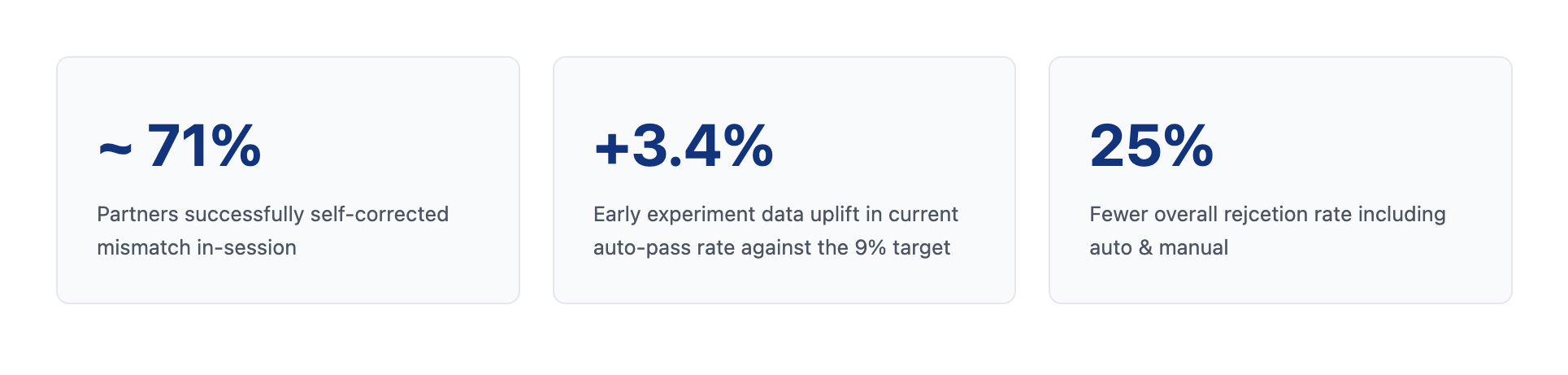
Business Impact - The redesign resulted in a huge success and almost 71% partners were able to self-correct the mismatches real-time in session -> leading to lower submissions for manual review
User Impact - Partners no longer wait days to learn a submission failed. Errors that used to require a full resubmission cycle and an analyst's manual rejection are now caught and resolved in the same session they occur in.
Strategic Impact - This wasn't just about catching document errors faster. It was about making sure a partner never has to wonder what went wrong - because the system tells them, in the moment, while there's still time to fix it.
Verification isn't just about preventing bad submissions. It's about giving people enough information and control to recover when something goes wrong.
My role was to turn a complex verification system into a predictable, recoverable experience - while balancing conversion, regulatory requirements, operational efficiency and technical constraints.

